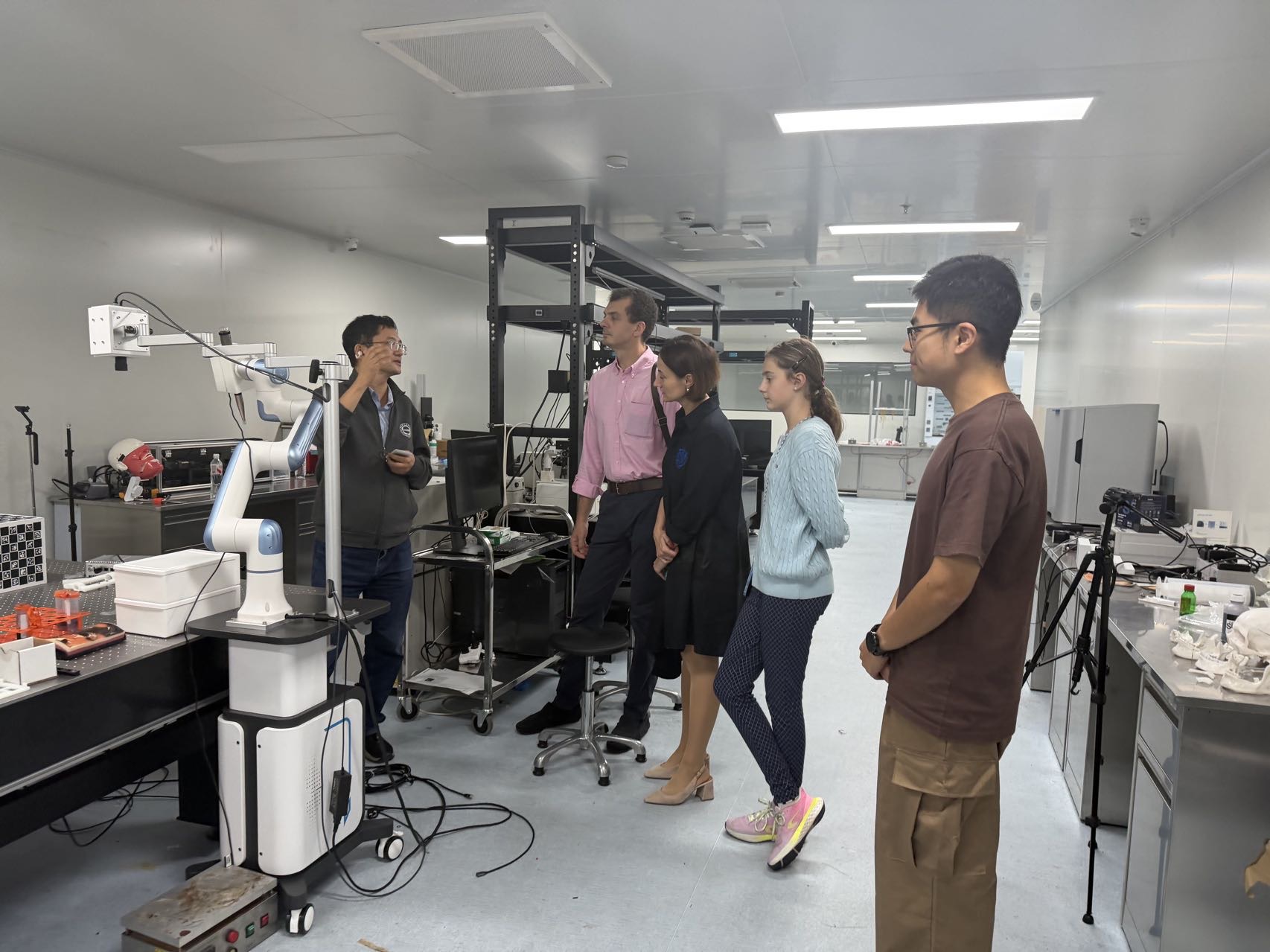
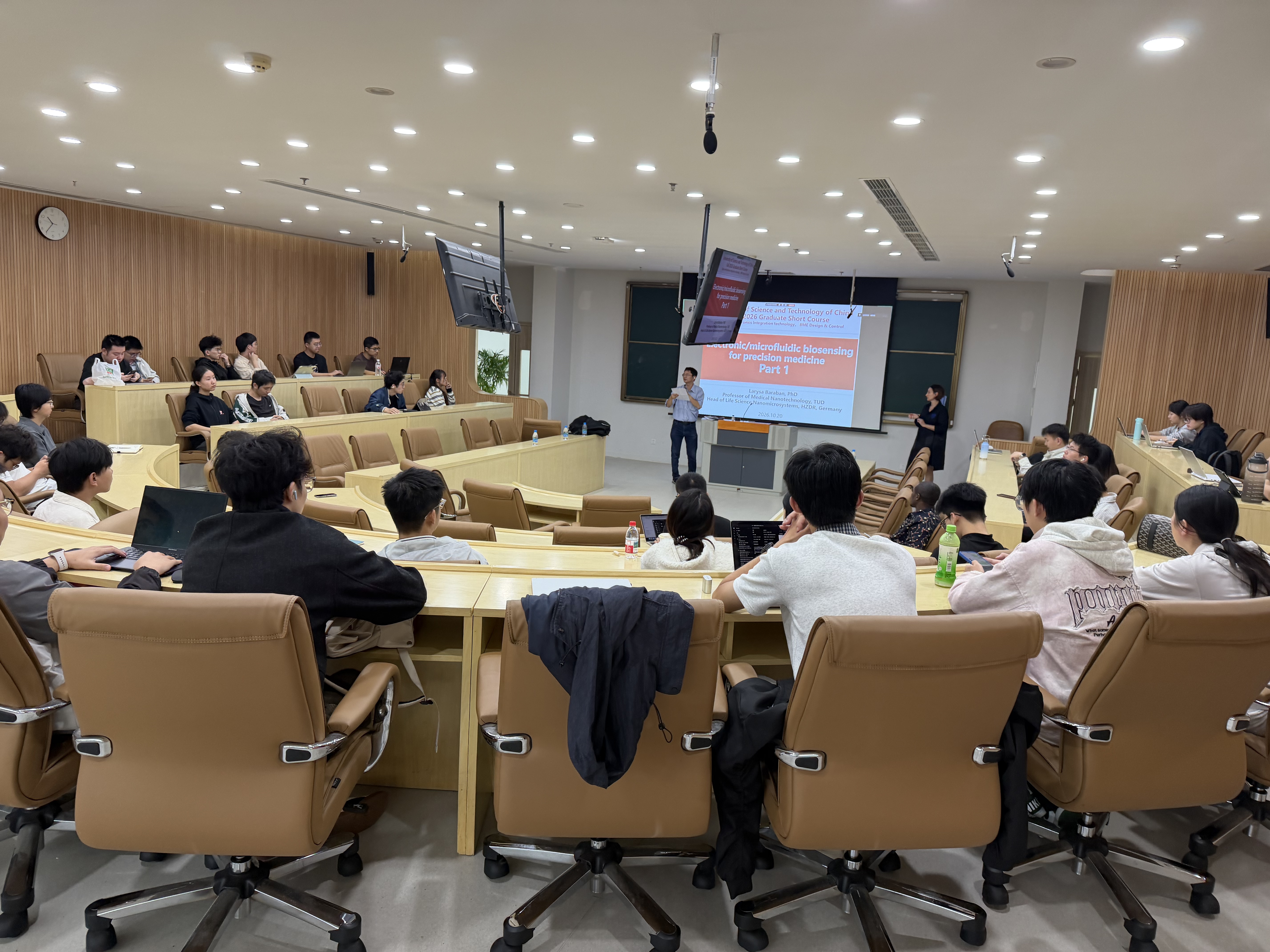
On October 20–21, 2026, Dr. Denys Makarov, Head of the Department of Intelligent Materials and Systems at Helmholtz-Zentrum Dresden-Rossendorf (HZDR), Germany, and Dr. Larysa Baraban, Professor of Medical Nanotechnology at Technische Universität Dresden and Head of the Nano-Microsystems for Life Sciences group at HZDR, visited our research group at the Suzhou Institute for Advanced Research, University of Science and Technology of China (USTC). During their visit, they delivered lectures as part of the Dushu Forum lecture series on biomedical engineering, jointly organized by the Institute and the School of Biomedical Engineering.
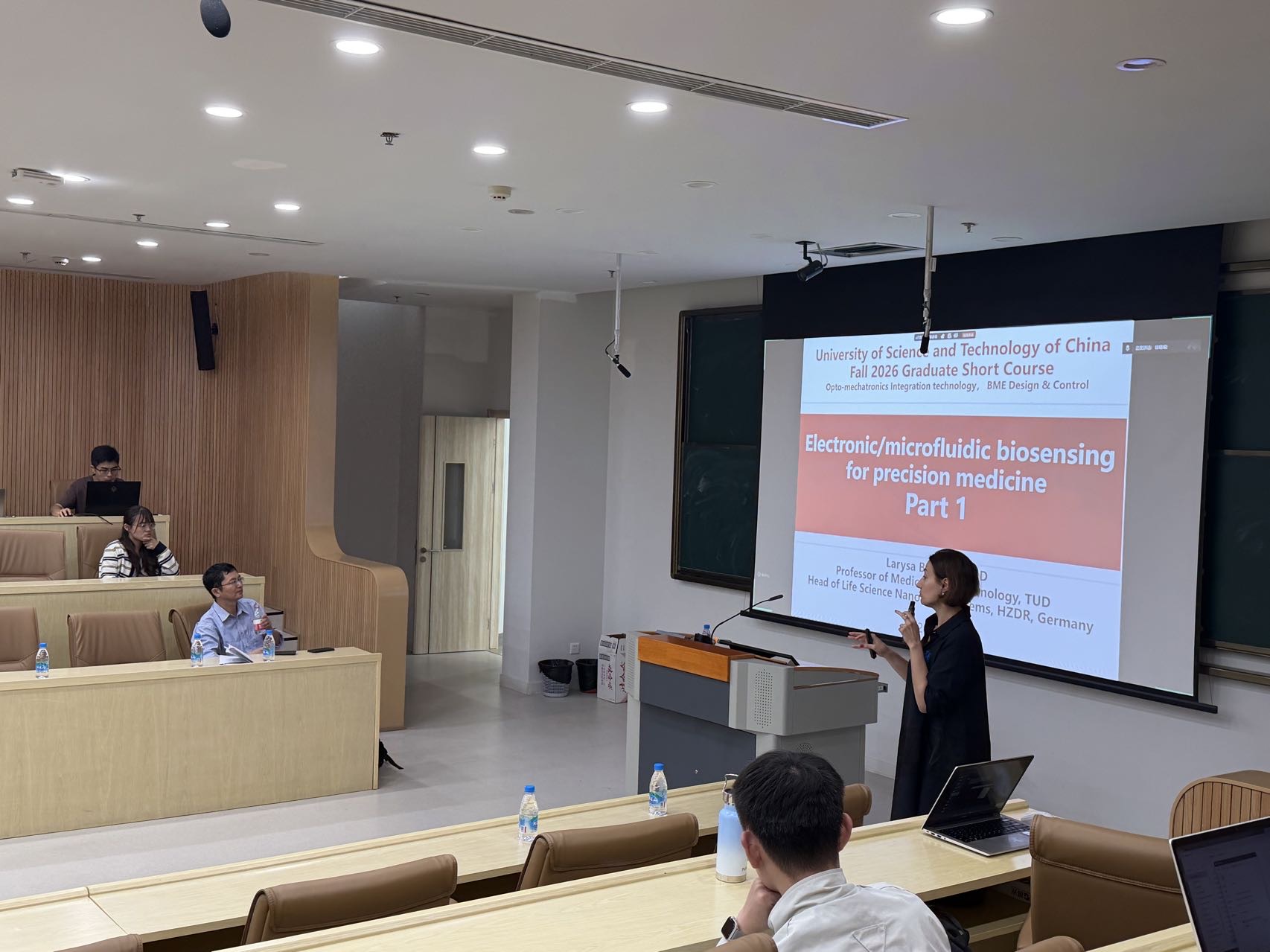
Dr. Larysa Baraban delivered lectures entitled “Electrical/Microfluidic Biosensing for Precision Medicine,” covering label-free nanobiosensing and droplet microfluidics for biomedical applications. She explained how nanowire sensors and extended-gate field-effect transistors translate biological interactions into measurable electrical signals. Examples included real-time monitoring of pancreatic α-amylase for postoperative assessment and lactate monitoring for tissue perfusion evaluation, illustrating the potential of miniaturized sensing platforms for clinical diagnostics and continuous monitoring.
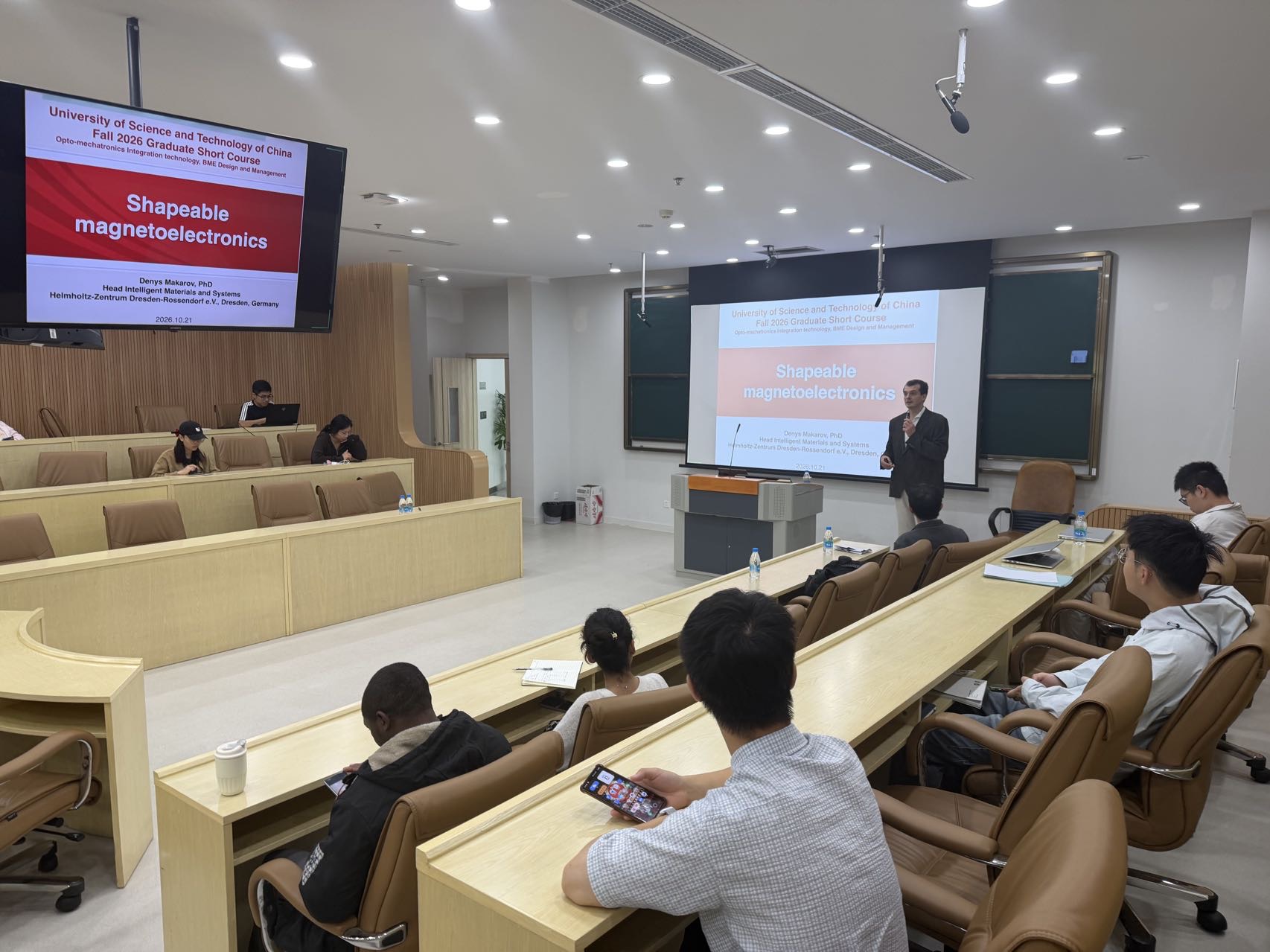
In Dr. Denys Makarov's lectures, entitled “Shapeable Magnetoelectronics,” he introduced the principles, fabrication, and applications of flexible, stretchable, and printed magnetic field sensors. He presented examples of magnetic sensing in electronic skins, smart textiles, touchless human–machine interfaces, and soft robotics. He also discussed self-healing, recyclable, and biodegradable magnetoelectronic devices, together with recent advances in AI-assisted signal processing and 3D-printed magnetic sensors.
The visit also provided an opportunity for the two researchers to exchange ideas with members of our group and explore potential directions for collaboration. Their work offered valuable perspectives relevant to our research in biomedical sensing, microfluidic systems, and tissue perfusion assessment. We look forward to continuing these discussions and developing further research connections.